
Company Car Tax and BIK Rates 2026/27 to 2029/30
- Rated 4.9/5 on Feefo
- FCA authorised, FRN 315268
- BVRLA leasing broker member
- Part of Global Vehicle Group
- Fully electric company cars are taxed at 4% of P11D value for 2026/27, confirmed by HMRC.
- The electric rate rises to 5% in 2027/28, 7% in 2028/29 and 9% in 2029/30, where it caps.
- Petrol and diesel cars are charged at up to 37% today, rising to a 38% ceiling in 2028/29 and 39% in 2029/30.
- Plug-in hybrids (1 to 50g/km) are range-banded at 4% to 16% now, then a flat 18% from April 2028 and 19% from April 2029.
- A £45,000 electric car costs a 40% taxpayer £720 a year in 2026/27; the same value petrol car at 150g/km costs £6,480, a difference of £5,760 every year.
- Employers pay Class 1A National Insurance at 15% on the same taxable value.
- On Business Contract Hire, 100% of rentals can be set against profits at 50g/km or below; 85% above that.
- The calculation is P11D value x BIK percentage x your income tax rate.
Want the figures for a specific car? Use our company car tax calculator to work out the BiK tax for 2026/27 to 2029/30 and compare two cars side by side.
BIK rates for 2027/28: what changes on 6 April 2027
From 6 April 2027 the appropriate percentage for a fully electric company car rises from 4% to 5%. Plug-in hybrids from 1 to 50g/km stay range-banded for one more year, at 5% to 17% depending on their official electric range. Cars from 51 to 69g/km rise by one percentage point, and cars from 70g/km upwards keep their 2026/27 rates, up to the 37% maximum. The bigger step comes a year later: from April 2028 every car from 1 to 50g/km moves to a flat 18%.
| CO2 and electric range | 2026/27 | 2027/28 (from 6 April 2027) |
|---|---|---|
| Fully electric (0g/km) | 4% | 5% |
| 1-50g/km, 130+ miles electric range | 4% | 5% |
| 1-50g/km, 70-129 miles | 7% | 8% |
| 1-50g/km, 40-69 miles | 10% | 11% |
| 1-50g/km, 30-39 miles | 14% | 15% |
| 1-50g/km, under 30 miles | 16% | 17% |
| 51-54g/km | 17% | 18% |
| 55-59g/km | 18% | 19% |
| 60-64g/km | 19% | 20% |
| 65-69g/km | 20% | 21% |
| 70-74g/km | 21% | 21% |
| 75-79g/km | 21% | 21% |
| 100-104g/km | 26% | 26% |
| 150-154g/km | 36% | 36% |
| 155g/km and above | 37% | 37% |
What it means in pounds. A £45,000 electric car at 5% has a taxable value of £2,250. That is £450 a year for a basic-rate (20%) taxpayer and £900 for a higher-rate (40%) taxpayer, against £360 and £720 in 2026/27. The employer's Class 1A National Insurance at 15% rises from £270 to £337.50. Scottish income tax rates differ. Rates are from the HMRC future rates tables, checked September 2026. Non-RDE2 diesels add a 4% supplement, capped at 37%.
If a lease you sign this year runs into 2027/28 or beyond, plan on the later rates, not today's. The full five-year table follows, and the April 2028 plug-in hybrid change is covered further down.
How company car tax is calculated
Benefit in Kind (BIK) is the tax you pay for having a company car available for private use. The sum is simple: take the car's P11D value, multiply it by the appropriate percentage HMRC assigns to its CO2 band, then multiply that taxable value by your income tax rate (20%, 40% or 45% in England, Wales and Northern Ireland; Scottish rates differ). The company pays too: employers owe Class 1A National Insurance at 15% on the same taxable value.
The P11D value is the manufacturer's list price including VAT, delivery and factory-fitted options, excluding the first registration fee and road tax. Discounts never reduce it, and the rules are identical whether the business buys the car or leases it through Business Contract Hire. HMRC rounds exact CO2 figures down to the nearest 5g/km, and non-RDE2 diesels add a 4% supplement, capped at the maximum rate.
Official BIK rates 2025/26 to 2029/30: the full table
These are the appropriate percentages for cars registered from 6 April 2020, taken directly from HMRC's published tables and the announced future-year uplifts. Two structural points matter for planning: sub-75g/km bands are capped at 21% through 2027/28 while 75g/km and above stay frozen, and from April 2028 the whole 1 to 50g/km group collapses onto a single flat rate.
| CO2 (g/km) | Electric range | 2025/26 | 2026/27 | 2027/28 | 2028/29 | 2029/30 |
|---|---|---|---|---|---|---|
| 0 (fully electric) | - | 3% | 4% | 5% | 7% | 9% |
| 1 to 50 | 130 miles or more | 3% | 4% | 5% | 18% | 19% |
| 1 to 50 | 70 to 129 miles | 6% | 7% | 8% | 18% | 19% |
| 1 to 50 | 40 to 69 miles | 9% | 10% | 11% | 18% | 19% |
| 1 to 50 | 30 to 39 miles | 13% | 14% | 15% | 18% | 19% |
| 1 to 50 | under 30 miles | 15% | 16% | 17% | 18% | 19% |
| 51 to 54 | - | 16% | 17% | 18% | 19% | 20% |
| 55 to 59 | - | 17% | 18% | 19% | 20% | 21% |
| 60 to 64 | - | 18% | 19% | 20% | 21% | 22% |
| 65 to 69 | - | 19% | 20% | 21% | 22% | 23% |
| 70 to 74 | - | 20% | 21% | 21% | 22% | 23% |
| 75 to 79 | - | 21% | 21% | 21% | 22% | 23% |
| 80 to 84 | - | 22% | 22% | 22% | 23% | 24% |
| 85 to 89 | - | 23% | 23% | 23% | 24% | 25% |
| 90 to 94 | - | 24% | 24% | 24% | 25% | 26% |
| 95 to 99 | - | 25% | 25% | 25% | 26% | 27% |
| 100 to 104 | - | 26% | 26% | 26% | 27% | 28% |
| 105 to 109 | - | 27% | 27% | 27% | 28% | 29% |
| 110 to 114 | - | 28% | 28% | 28% | 29% | 30% |
| 115 to 119 | - | 29% | 29% | 29% | 30% | 31% |
| 120 to 124 | - | 30% | 30% | 30% | 31% | 32% |
| 125 to 129 | - | 31% | 31% | 31% | 32% | 33% |
| 130 to 134 | - | 32% | 32% | 32% | 33% | 34% |
| 135 to 139 | - | 33% | 33% | 33% | 34% | 35% |
| 140 to 144 | - | 34% | 34% | 34% | 35% | 36% |
| 145 to 149 | - | 35% | 35% | 35% | 36% | 37% |
| 150 to 154 | - | 36% | 36% | 36% | 37% | 38% |
| 155 and above | - | 37% | 37% | 37% | 38% | 39% |
2025/26 to 2027/28 are HMRC's published tables. 2028/29 and 2029/30 apply the uplifts announced at Autumn Budget 2024 (electric up 2 points a year; all 1 to 50g/km cars fixed at 18% then 19%; every other band up 1 point a year, capped at 38% then 39%), which were left unchanged at the Autumn Budget on 26 November 2025 and the 2026 Spring Statement. Exact CO2 figures are rounded down to the nearest 5g/km. Diesels that do not meet the RDE2 standard add a 4% supplement, capped at the maximum rate.
Worked example: electric versus petrol for a 40% taxpayer
The table below shows the same £45,000 P11D value on a fully electric SUV and a 150g/km petrol SUV in 2026/27. The electric driver pays £720 a year through payroll; the petrol driver pays £6,480. That is £5,760 a year less, or £480 a month in payroll terms, before a penny of fuel saving is counted, and the employer's Class 1A bill falls by £2,160 on top.
| Fully electric SUV | Petrol SUV | |
|---|---|---|
| P11D value | £45,000 | £45,000 |
| CO2 emissions | 0g/km | 150g/km |
| BIK rate 2026/27 | 4% | 36% |
| Taxable value | £1,800 | £16,200 |
| Tax at 20% (basic rate) | £360 a year | £3,240 a year |
| Tax at 40% (higher rate) | £720 a year | £6,480 a year |
| Employer Class 1A NIC at 15% | £270 a year | £2,430 a year |
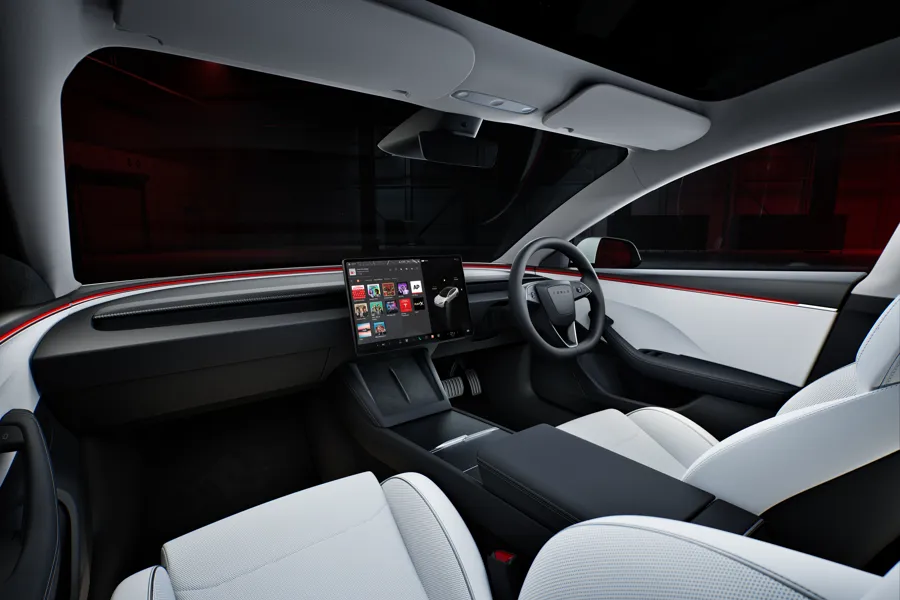
What an electric company car costs over the next four years
Because the electric pathway is legislated through to 2030, a director choosing an EV today can see the whole cost line before signing. Even at the 9% cap in 2029/30, the £45,000 electric car below costs £1,620 a year at the higher rate. The petrol equivalent at 150g/km costs £26,460 in driver tax over the same four years as its band steps 36%, 36%, 37%, 38%, a difference of just under £22,000 for one car.
| Tax year | BIK rate | Taxable value | Tax at 40% |
|---|---|---|---|
| 2026/27 | 4% | £1,800 | £720 |
| 2027/28 | 5% | £2,250 | £900 |
| 2028/29 | 7% | £3,150 | £1,260 |
| 2029/30 | 9% | £4,050 | £1,620 |
Plug-in hybrids: the April 2028 change to plan around
Today a plug-in hybrid's rate depends on its official electric-only range: a 1 to 50g/km car with 130 miles or more of range is taxed like an EV, while one with under 30 miles of range sits at 16% in 2026/27. From 6 April 2028 that entire structure disappears. Every 1 to 50g/km car moves to a flat 18%, rising to 19% in 2029/30, regardless of range.
The planning point is order timing. Take a £45,000 PHEV with a 42-mile electric range: it costs a 40% taxpayer £1,800 a year in 2026/27 and £1,980 in 2027/28, then jumps to £3,240 in 2028/29, a 64% rise in one year. A typical four-year agreement signed now spends half its life on the flat rate, and a long-range PHEV loses its entire tax advantage over a short-range one overnight. If the driver can charge at home or at work, the fully electric version of the same car avoids the cliff completely, which is why our electric car leasing hub is where most company car conversations now start.
What the rates mean for company directors
For a limited company director the BIK table is only half the picture. On Business Contract Hire the rentals are a trading expense: 100% can be set against profits when the car emits 50g/km or less, falling to 85% above that line, and where the car has private use half the VAT on rentals can usually be reclaimed, with all of it recoverable on a maintenance package, depending on circumstances. Stack those reliefs on a 4% BIK rate and a fully electric car is currently the standout way for a director to run a car through the business. If the business is weighing a company car against a cash allowance, our company car or car allowance guide sets both sides out, and VAT on business car and van leasing covers the VAT on the rentals line by line.
Model choice then becomes a P11D conversation as much as a monthly one. A Volvo EX90 and a Tesla Model 3 sit at very different list prices, so the same 4% band produces very different payroll deductions, and an optioned car carries every extra into the calculation. Intelligent Vehicle Finance is a phone-first specialist broker: we confirm the exact P11D value and BIK band on any car you are considering before you commit, across business and personal contract hire. IVF is a credit broker, not a lender; we source finance from a panel of trusted funders and may receive a commission from lenders for introducing you to them. Intelligent Vehicle Finance is also part of Global Vehicle Group, whose brands have funded more than 70,000 vehicles - so behind the personal service sits genuine group scale.
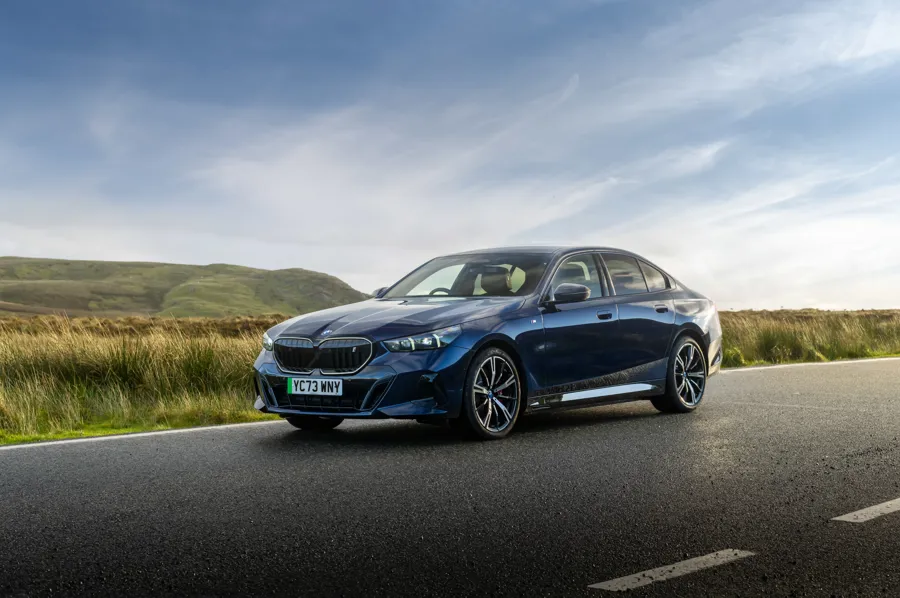
Which company cars do the rates favour? Pages from Intelligent Vehicle Finance
The rates above reward electric and, to a lesser degree, plug-in hybrid company cars. The electric models IVF arranges most often for directors and fleets are on our Tesla Model 3 leasing, BMW i4 and i5 leasing, Mercedes EQE and EQS leasing, Audi Q4 e-tron leasing, Kia EV6 leasing, BYD Sealion 7 leasing and Porsche Taycan leasing pages; the plug-in hybrid case is worked through on Range Rover Sport leasing. For a family electric SUV, see Tesla Model Y leasing. Model-level worked reading: Cayenne E-Hybrid tax considerations and Porsche Macan electric and petrol tax considerations show how the electric range and CO2 figure move a driver between bands; neither page assigns a single band to the model. For how a limited company takes the lease, read the guide to company car leasing for directors and leasing vs buying a company car; the full electric line-up is on electric car leasing and business arrangements start at business car leasing.
Company car tax FAQs
How is company car tax calculated?
Multiply the car's P11D value by its HMRC appropriate percentage, then multiply that taxable value by your income tax rate. For example, a £45,000 electric car at 4% gives a £1,800 taxable value, which costs a 40% taxpayer £720 a year. Your employer pays Class 1A National Insurance at 15% on the same £1,800.
What is the BIK rate for an electric company car in 2026/27?
Fully electric cars (0g/km CO2) are taxed at 4% of P11D value for 2026/27. The rate is already legislated to rise to 5% in 2027/28, 7% in 2028/29 and 9% in 2029/30, and the November 2025 Budget left that pathway unchanged, so the roadmap is confirmed through to 2030.
Do I pay company car tax on a leased car?
Yes. HMRC applies exactly the same Benefit in Kind rules whether the company leases or buys the car. The charge is always based on the manufacturer's P11D list price when the car was new, not the rental the business actually pays, so leasing does not change your personal tax position.
What is a P11D value?
It is the car's list price including VAT, delivery and any factory-fitted options, but excluding the first registration fee and road tax. Discounts do not reduce it: HMRC always uses the published list price, so it is worth checking the exact P11D figure before you choose a car.
What happens to plug-in hybrid company car tax in April 2028?
From 6 April 2028 every car emitting 1 to 50g/km is taxed at a flat 18% regardless of electric range, rising to 19% in 2029/30. The current range-based bands of 4% to 16% disappear, so a PHEV ordered on a typical four-year cycle will spend part of its life on the much higher flat rate.
Who pays employer National Insurance on a company car?
The employer pays Class 1A National Insurance at 15% of the car's taxable value each year. For a £45,000 electric car at 4% that is £270 a year, while the same value petrol car at 36% would cost the business £2,430, so the company saves alongside the driver when the fleet goes electric.
Do these rates apply in Scotland?
The BIK percentages and taxable values are the same across the UK. What differs is the income tax rate you multiply by: Scottish income tax bands are set separately, so a Scottish taxpayer may pay a different amount on the same car. Your payroll applies the correct rates automatically.
Is diesel company car tax different?
Diesel cars that do not meet the RDE2 emissions standard carry a 4% supplement on top of the CO2-based percentage, capped at the maximum rate. Most new diesels registered in recent years are RDE2-compliant, so the supplement mainly affects older vehicles, and diesel plug-in hybrids are exempt from it.
What are the company car BIK rates for 2027/28?
From 6 April 2027, fully electric cars are taxed at 5% of P11D value. Plug-in hybrids from 1 to 50g/km are range-banded from 5% (130 miles or more of electric range) to 17% (under 30 miles). Cars from 51 to 69g/km rise by one percentage point on 2026/27, and cars from 70g/km upwards keep their 2026/27 rates, up to the 37% maximum. Non-RDE2 diesels add 4%, capped at 37%.
How much company car tax will I pay on an electric car in 2027/28?
At 5%, a £45,000 electric car has a taxable value of £2,250. A basic-rate (20%) taxpayer pays £450 a year and a higher-rate (40%) taxpayer pays £900, compared with £360 and £720 in 2026/27. Your employer pays Class 1A National Insurance at 15% of £2,250, which is £337.50. Scottish income tax rates differ.
Sources
Rates are taken from HMRC's appropriate percentage ready reckoner (480: Appendix 2), updated 6 April 2026, and HMRC's future rates tables to 2027/28. The 2028/29 and 2029/30 figures apply the uplifts announced at Autumn Budget 2024, which were confirmed unchanged at the Autumn Budget on 26 November 2025 and the 2026 Spring Statement.
Reviewed by Stacey Smith, Brand Director, Intelligent Vehicle Finance. Last updated: September 2026.
This guide is general information, not tax or financial advice. IVF and XLCR Vehicle Management Ltd are not tax advisers: always confirm your position with your accountant. Rates are correct at July 2026 per HMRC's published tables; worked examples are illustrative and use England, Wales and Northern Ireland income tax rates.
Intelligent Vehicle Finance is a trading style of XLCR Vehicle Management Ltd, authorised and regulated by the Financial Conduct Authority (FRN 315268), and a BVRLA member. IVF is a credit broker, not a lender, and may receive a commission from lenders for introducing customers to them.
Related guides
- Electric company car running costs - Home charging, advisory electric rates and company car tax.
- Business contract hire vs finance lease - VAT, accounting, end-value risk and what happens at the end.