
Omoda Leasing
- Rated 4.9/5 on Feefo
- FCA authorised, FRN 315268
- BVRLA leasing broker member
- Part of Global Vehicle Group


Which Omoda should you lease?
Choose Omoda 5 for petrol, full-hybrid or electric use in one model family, Omoda 7 for a petrol or plug-in SUV, and Omoda 9 for a larger five-seat plug-in with AWD. Charging access and luggage needs make a more useful starting point than Knight or Noble trim.
| Your requirement | Models to compare | What matters |
|---|---|---|
| SUV without external charging | Omoda 5 petrol or SHS-H | Petrol and full hybrid are separate entries. |
| Battery-electric SUV | Omoda 5 electric | Identify the 155kW/61kWh-labelled Knight or Noble. |
| Plug-in SUV | Omoda 7 SHS-P / Omoda 9 SHS-P | Confirm charging, seats, drivetrain and certified tax inputs. |
Omoda leasing at a glance
- Current Omoda 7 PHEV has a 590-litre boot.
- Current Omoda 7 petrol has a 639-litre boot.
- Current Omoda 9 has a 660-litre boot.
- Omoda 9 offers 70 litres more boot space than Omoda 7 PHEV.
- Current Omoda 9’s published braked towing limit is 1,500 kg; the supplied car’s approval and towing equipment govern use.
Omoda 5: three powertrains share the model route
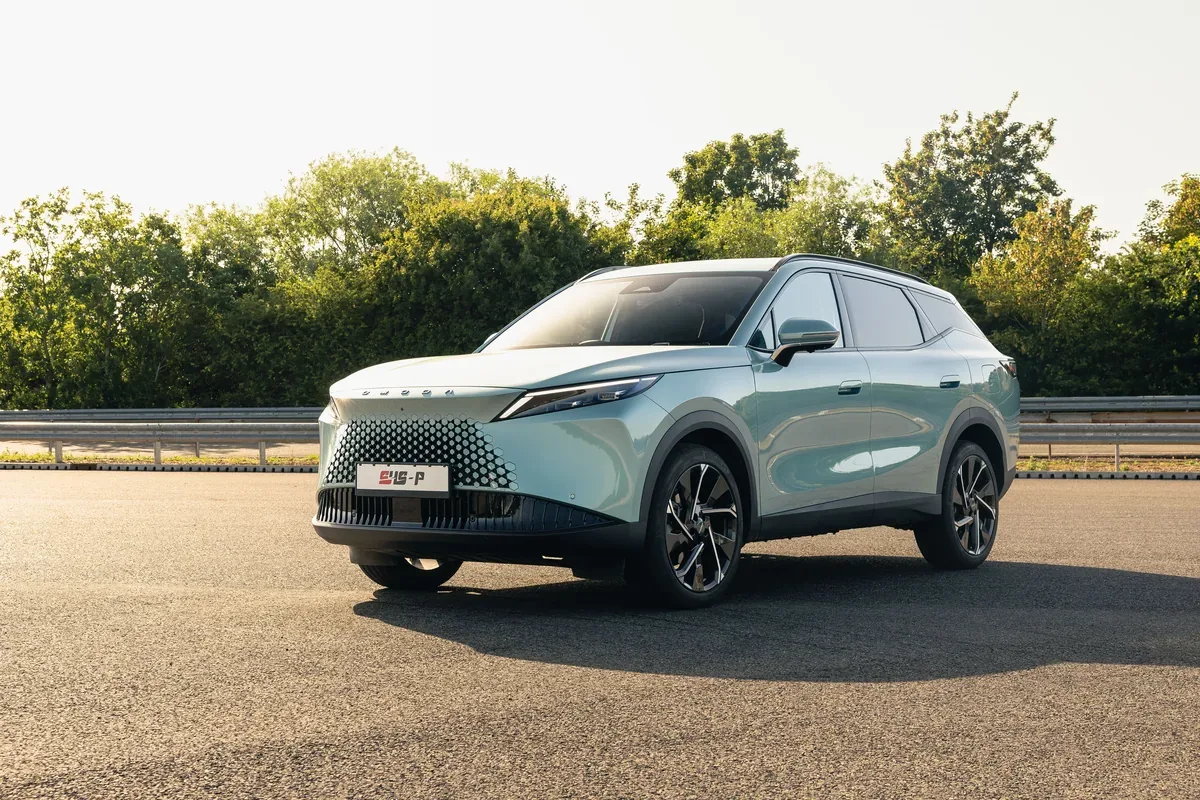
Choose Omoda 5 petrol or SHS-H if you want to refuel without plugging in, or the electric version when dependable charging fits your week. IVF lists 1.6 petrol, 1.5T full-hybrid and 155 kW electric cars labelled 61 kWh, with Knight and Noble names appearing across technologies.
Regular passengers and their bags should decide the Omoda body before equipment. Any electric range or charging benchmark needs the supplied UK battery, motor, wheels and year; the grade name alone does not identify the energy or tax basis.
Omoda 7: petrol or plug-in hybrid?
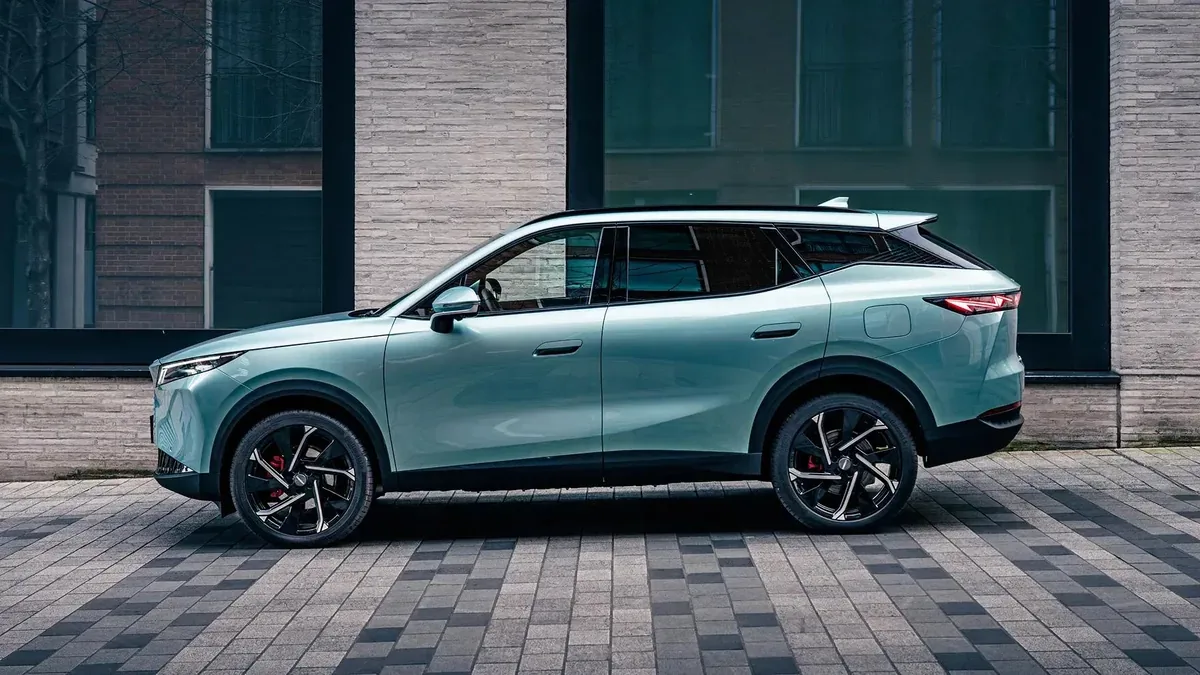
Choose Omoda 7 SHS-P when regular charging fits a five-seat family SUV brief. The current UK plug-in has 590 litres of rear boot space, while the petrol version is quoted at 639 litres. The powertrain decision therefore changes the luggage benchmark as well as the fuel routine.
Choose Omoda 5 Electric instead if fully electric driving is essential. The 7’s SHS-P is still a plug-in hybrid, and its electric-only tax figure is distinct from a combined petrol-and-electric range headline.
Omoda 9: five-seat space with plug-in power
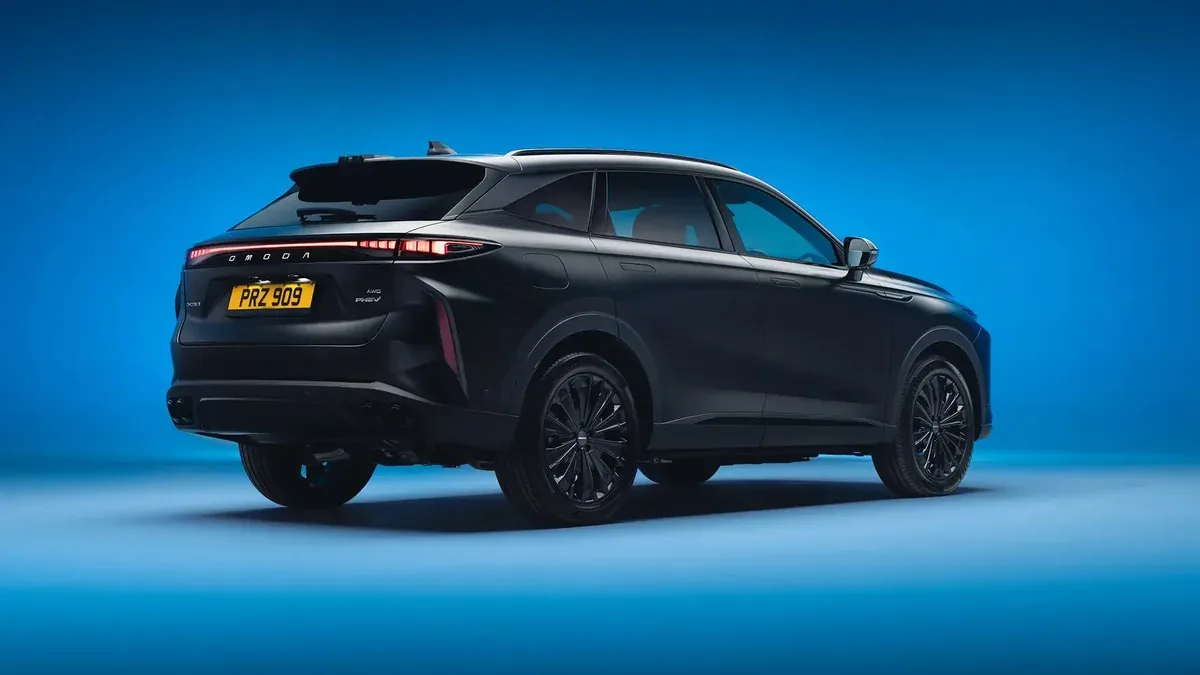
A five-seat plug-in with AWD and more rear luggage space than Omoda 7 SHS-P points to Omoda 9. Its published 660-litre boot adds 70 litres over the 7 plug-in’s 590 litres. Omoda also quotes up to 1,500 kg braked towing for the 9, giving a trailer-led enquiry a specific starting point.
Choose another model if a sixth or seventh seat is essential. These are current UK model benchmarks, with the exact offered powertrain, approved towbar, payload, noseweight and train limits governing use; seats-up luggage space is not a third row.
Omoda servicing and support
Choose the support arrangement using the current Omoda policy, including the component-cover improvements announced in August 2026. That is more useful than an old launch summary when an earlier allocation is offered. The applicable component and use limits still govern.
Put the local workshop, roadside assistance and any connected-service subscription into the discussion. IVF’s electric car leasing hub offers other battery-electric bodies if the electric 5 does not meet the passenger brief.
What IVF adds to your Omoda shortlist
Ask IVF to distinguish Omoda 5’s three powertrains and the 7’s petrol and SHS-P specifications before comparing Knight or Noble equipment. We can then put the five-seat 9 beside the right 7, with the 70-litre boot difference and your actual charging routine in view.
Read IVF customer feedback on Feefo. Agreement guides: Business Contract Hire and Personal Contract Hire.
Warranty, maintenance and the full lease term
Omoda’s UK vehicle warranty headline is seven years or 100,000 miles, subject to the applicable policy. The August 2026 update extends specified component cover retrospectively, while some components retain different mileage limits. It is not an unconditional all-component promise.
Obtain the current UK policy for the exact vehicle and intended use. Confirm high-voltage battery, capacity, servicing and any hire or rental classification limits separately. Ask for written clarification where the contract-hire arrangement’s eligibility is unclear.
Optional maintenance, tyres, insurance, roadside assistance and return condition remain separate. The quotation should identify what is actually included for the proposed term and mileage.
Omoda company-car tax: use the exact vehicle
These exact Omoda 5 electric and SHS-H entries show different tax bases within one model family. SHS-P versions need their own certified plug-in assessment. This is not a rental or overall savings comparison.
Personal-tax illustrations: a full year, 40% income tax and no employee contributions or other adjustments, using IVF’s 10 September 2026 Omoda entries. Neither lease rentals, employer costs nor equivalent-car savings.
| Listed derivative | P11D | Tax basis | BiK | Tax at 40% |
|---|---|---|---|---|
| 5 155kW Knight 61kWh 5dr Auto | £33,000 | Zero-emission electric | 4% | £528.00 |
| 5 1.5T SHS-H Knight 5dr 1DHT | £25,245 | 120 g/km | 30% | £3,029.40 |
The published tax-year path for Omoda
The illustrated bands are Zero-emission electric: 4% in 2026/27; Petrol/hybrid, 120–124 g/km: 30% in 2026/27. Confirm P11D, certified CO2/range and transitional treatment with your accountant. Read the general company-car BiK rules. Electric Omoda 5 uses zero-emission BiK; Omoda 5 SHS-H is a full hybrid, while SHS-P versions of 7 and 9 require plug-in tax inputs; petrol entries remain emissions-based.
| Tax specification | 2026/27 | 2027/28 | 2028/29 | 2029/30 |
|---|---|---|---|---|
| Zero-emission electric | 4% | 5% | 7% | 9% |
| Petrol/hybrid, 120–124 g/km | 30% | 30% | 31% | 32% |
| Qualifying PHEV, 1–50 g/km, certified electric range 40–69 miles | 10% | 11% | 18% | 19% |
Omoda: road taxes across the agreement
ECS uses list price with options before discounts, not rental or assumed P11D equivalence; confirm registration and funder handling. VED rules; eVED proposal. Tax checked 10 September 2026.
| Cost and timing | Application to this shortlist | Rule to check |
|---|---|---|
| Vehicle Excise Duty (VED), 2026/27 | Omoda 5 electric versus petrol, SHS-H and SHS-P | Year one: £10 for zero-emission cars; petrol/hybrid rates follow registered CO2, without the former hybrid discount. Thereafter: £200 annually before supplements. |
| Expensive Car Supplement (ECS) | Omoda 9 plug-in retains the hybrid threshold. | £440 annually for five years from the second licence. Thresholds: more than £40,000 petrol/hybrid; more than £50,000 for qualifying zero-emission cars registered from 1 April 2025. |
| Planned eVED, April 2028 | Electric 5 and SHS-P versions of 7/9 differ. | Additional to VED: 3p per mile electric; 1.5p per mile plug-in hybrid. Not a current charge; final legislation and implementation remain relevant. |
Omoda business accounts
Ask your accountant about 50% rental-VAT recovery with private availability, depending on circumstances; the 15% hire-cost restriction above 50 g/km; and FRS 102 lease recognition for periods from 1 January 2026.
From Omoda shortlist to handover
- Choose Omoda 5, 7 or 9 by seats, luggage and charging access before comparing Noble or Knight equipment.
- Compare initial and monthly rentals, term, mileage, optional maintenance, fees and early-termination conditions on the same basis.
- Keep SHS-H, SHS-P or electric clearly identified in the Omoda offer, with the supplied support terms.
- Agree return standards and charges for excess mileage, damage beyond fair wear and tear or missing equipment, with insurance and fuel or electricity budgeted separately.
Compare the exact hybrid or electric requirement
Compare electric Omoda 5 with MG MGS5 on the actual cabin, battery and support.
Compare Omoda 7 SHS-P with Jaecoo 7 SHS-P using the same charging routine, certified tax inputs and agreement assumptions.
Omoda leasing questions
Settle the practical details before choosing your car and contract.
Are all Omoda 5 versions electric?
No. The 5 route contains petrol, SHS-H full-hybrid and electric entries. Knight or Noble grade names alone do not identify the powertrain.
What is the difference between SHS-H and SHS-P?
SHS-H identifies a full hybrid in these listings; SHS-P identifies a plug-in hybrid. A PHEV needs a regular external charging plan to use stored electric energy and has its own certified tax inputs.
Does Omoda 9’s larger body give it seven seats?
No. Omoda’s UK specification is five-seat, with a 660-litre boot. If six or seven people must travel, it does not meet that brief. The same specification gives a 1,500kg braked towing maximum, subject to the supplied vehicle’s approved equipment and loaded limits. Match the actual UK model year and configuration rather than inferring capacity from the model number.
Can I choose a petrol Omoda 7?
A 1.6T petrol Knight entry appears alongside SHS-P plug-in versions in the catalogue. Ask IVF to confirm the exact specification and supply.
Can combined hybrid range be used as electric range?
No. Combined petrol-and-electric distance is different from electric-only certification. Use the supplied derivative’s certified electric range and CO2 for a plug-in company-car assessment.
Did Omoda’s warranty change in August 2026?
Omoda and Jaecoo announced retrospective UK extensions for specified components. The vehicle headline remains seven years or 100,000 miles, subject to current policy, component limits and eligibility.
Are connected services included indefinitely?
Do not assume so. Confirm the functions supplied, any subscription period and what happens at renewal. Future updates or overseas features should not be treated as already included on the actual UK car.
Is maintenance included in an Omoda lease?
Maintenance is optional: check that the quotation itemises servicing, tyres and exclusions for your chosen Omoda. Warranty cover for defects is separate from routine maintenance, insurance, energy and return charges.
What should I confirm before ordering?
Keep SHS-H, SHS-P or electric clearly identified in the Omoda offer, with the supplied support terms. Compare the full hire commitment, including early termination and end-of-contract charges.
Omoda leasing: talk through your shortlist
Ask IVF to compare Omoda’s five-seat choices, including the plug-in 9 and the different powertrains in 5 and 7.
Intelligent Vehicle Finance is a trading name of XLCR Vehicle Management Ltd. Authorised and regulated by the Financial Conduct Authority, FRN 315268. We are a credit broker, not a lender, and we may receive a commission from lenders for introducing you to them. All vehicle finance is subject to status and individual funder criteria.
Company No. 03923327. The Melville Building, 15 Royal William Yard, Plymouth, PL1 3RP.
Specifications and catalogue reviewed 10 September 2026. Manufacturer range and charging figures depend on model year, version and test conditions; real-world results vary. Images are illustrative of the model and may show optional equipment.
Tax treatment depends on individual circumstances and may change; consult your accountant.
Last updated: September 2026