
Range Rover Sport Leasing
- Rated 4.9/5 on Feefo
- FCA authorised, FRN 315268
- BVRLA leasing broker member
- Part of Global Vehicle Group
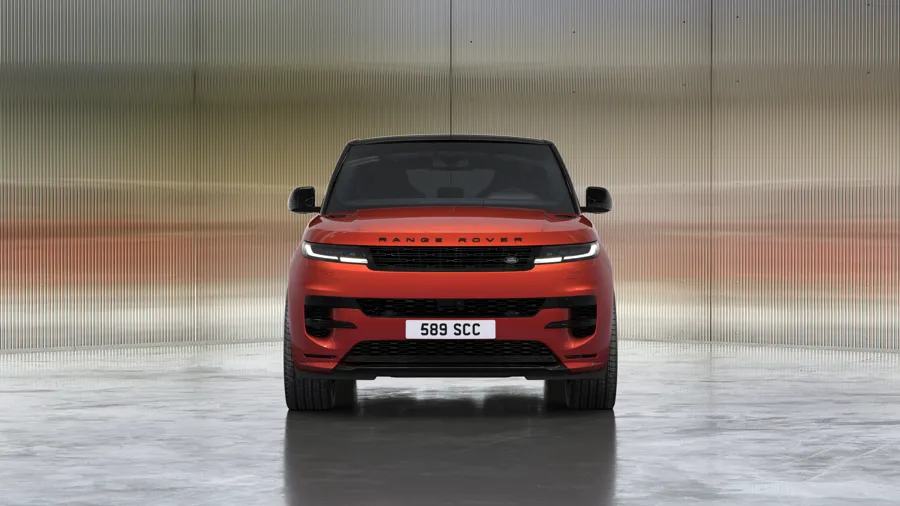
Why lease a Range Rover Sport?
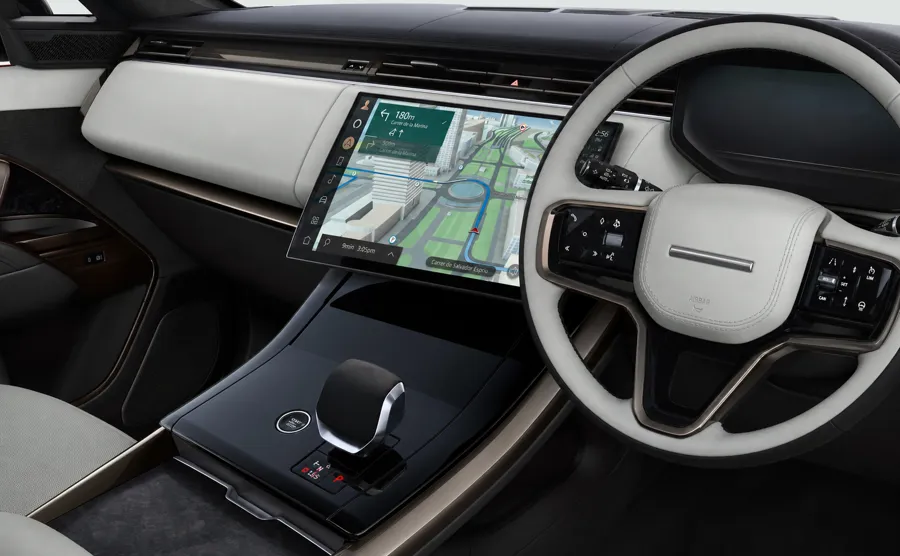
The Range Rover Sport is one of the most complete performance SUVs money can lease. It pairs genuine Land Rover capability and a commanding driving position with the pace and composure of a sports saloon, wrapped in a cabin that sits comfortably alongside anything from Germany. Air suspension, the Pivi Pro system and a choice of six-cylinder, V8 and plug-in hybrid powertrains mean there is a version for almost every brief, from motorway-mile diesel to the 626PS SV flagship.
Leasing rather than buying makes particular sense on a car at this price. You avoid the heavy first-years depreciation that a Range Rover Sport carries, you fix your monthly cost for the term, and you simply hand the car back at the end. For a company-car driver, the plug-in hybrid P460e is the most tax-efficient way into a Range Rover Sport, combining the badge with a company-car tax bill a fraction of the petrol or V8 trims.
Explore the wider Land Rover lease range, compare with the full-size Range Rover, or look at the Defender if you need more outright utility.
Range Rover Sport leasing: key facts
Range Rover Sport powertrain line-up
The Range Rover Sport range spans efficient mild-hybrid diesel and petrol engines, two plug-in hybrids, a V8 and the SV performance flagship. Each suits a different driver, and the right choice usually comes down to your annual mileage and whether the car is a company car.
| Trim | Powertrain | In short | Best for |
|---|---|---|---|
| D350 | 3.0 diesel mild hybrid | Long-legged, efficient diesel torque | High-mileage motorway drivers |
| P400 | 3.0 petrol mild hybrid | Smooth six-cylinder petrol refinement | Lower-mileage private buyers who prefer petrol |
| P460e | 3.0 petrol plug-in hybrid | Over 70 miles WLTP electric range, lowest BiK | Company-car drivers who want the lowest tax |
| P550e | 3.0 petrol plug-in hybrid | Same electric range, 0-60mph in around 4.7s | Tax efficiency with strong performance |
| P530 | 4.4 V8 petrol | Effortless V8 pace and soundtrack | Private buyers prioritising outright performance |
| P635 SV | 4.4 V8 performance | The quickest, most focused Range Rover Sport | Flagship and enthusiast buyers |
Line-up correct at time of writing and dependent on specification. Electric range and performance figures are manufacturer WLTP and official data; real-world figures vary with driving style, load and weather. Source: Land Rover, 2026.
Company car tax on a Range Rover Sport
It pays to be honest here, because not every Range Rover Sport is a tax-efficient company car. The mild-hybrid petrol, diesel and V8 trims are powerful but high-emission, so they sit in the top Benefit-in-Kind bands and carry a significant monthly company-car tax charge for a higher-rate taxpayer. If the car is a personal lease, that does not apply. But if you are choosing a Range Rover Sport as a company car, the powertrain you pick changes the tax picture dramatically.
The plug-in hybrid P460e and P550e are the tax-efficient choice, and the 70-mile line is what makes them special. For 2026/27, HMRC places plug-in hybrids emitting 1 to 50g/km with a certified electric range of 70 to 129 miles in the 7% Benefit-in-Kind band, while those with 40 to 69 miles sit at 10%. With over 70 miles of certified electric range, the Range Rover Sport plug-in hybrid clears that threshold, something its closest German rivals currently do not, while the mild-hybrid petrol, diesel and V8 versions sit in the top bands, up to 37%. For many company-car drivers, the plug-in hybrid is the only version of the Range Rover Sport that makes sense on tax, while still delivering the performance and presence the car is known for.
One important timing point: the company-car tax treatment of plug-in hybrids changes from April 2028, when the current range-based bands end and the advantage narrows sharply. That makes the PHEV benefit time-sensitive and worth factoring into your lease term. For the full electric-vehicle tax picture, see our electric car leasing hub, and for the business-lease mechanics our Business Contract Hire page. VAT on the monthly rentals is recoverable in part or in full where the car is used for business, depending on circumstances.
Benefit-in-Kind bands quoted are the HMRC appropriate percentages for 2026/27; the band for any individual vehicle depends on its own certified CO2 and electric range figures, which vary by derivative, specification and wheel size. Company-car tax on plug-in hybrids depends on CO2 emissions and certified electric range, and the plug-in hybrid Benefit-in-Kind regime changes from April 2028. Fully electric company cars are taxed at 4 percent for 2026/27, rising to 5 percent in 2027/28 and 7 percent in 2028/29. Rates are set by HMRC and subject to change. Tax treatment depends on individual circumstances. Always consult your accountant.
Which Range Rover Sport is most tax-efficient as a company car?
The table below sets the three broad powertrain types against each other on the measures that decide company-car cost: electric range, emissions band and the resulting Benefit-in-Kind position. It is a within-range comparison, so every figure is for the Range Rover Sport itself.
| Powertrain | Electric range | CO2 band | Company-car tax position |
|---|---|---|---|
| Plug-in hybrid (P460e / P550e) | Over 70 miles WLTP | Below 50g/km | Lowest - the 7% band for 2026/27 |
| Mild-hybrid petrol / diesel (P400 / D350) | None | High | Top BiK bands, up to 37% - significant monthly tax |
| V8 (P530 / P635 SV) | None | Highest | Top BiK bands, up to 37% - highest running cost as a company car |
General guidance only, for company-car (Benefit-in-Kind) purposes; personal leases are not affected by BiK. Exact bands depend on the specific derivative and are set by HMRC. The plug-in hybrid Benefit-in-Kind regime changes from April 2028. Always confirm your position with your accountant.
How does it compare with its plug-in hybrid rivals?
The Range Rover Sport plug-in hybrid competes with a small group of premium plug-in hybrid SUVs. The table below sets it against the cars company-car drivers most often cross-shop, on the two measures that decide the tax bill: certified electric range and the resulting 2026/27 Benefit-in-Kind band.
| Model | Official electric range (up to) | 2026/27 BiK band |
|---|---|---|
| Range Rover Sport P460e | 76 miles | 7% (70 to 129 mile band) |
| BMW X5 xDrive50e | 67 miles | 10% (40 to 69 mile band) |
| Mercedes GLE 400 e | 65 miles | 10% (40 to 69 mile band) |
| Porsche Cayenne E-Hybrid | 52 miles | 10% (40 to 69 mile band) |
Electric range figures are manufacturer WLTP figures, correct at July 2026, and vary with derivative, specification and wheel size. Benefit-in-Kind bands are the HMRC appropriate percentages for 2026/27 for cars emitting 1 to 50g/km; the band for any individual vehicle depends on its own certified figures. Comparison is for general guidance; IVF can quote any of these models.
That three-point band gap is the Range Rover Sport's quiet advantage: none of its three German rivals currently clears HMRC's 70-mile electric-range threshold, even on their most generous official figures. The result is a materially lower company-car tax bill for the same class of car, on top of the performance and capability case. If you are open to a seven-seat plug-in hybrid at a lower price point, the Volvo XC90 T8 is also worth a look - IVF arranges Volvo leasing too.
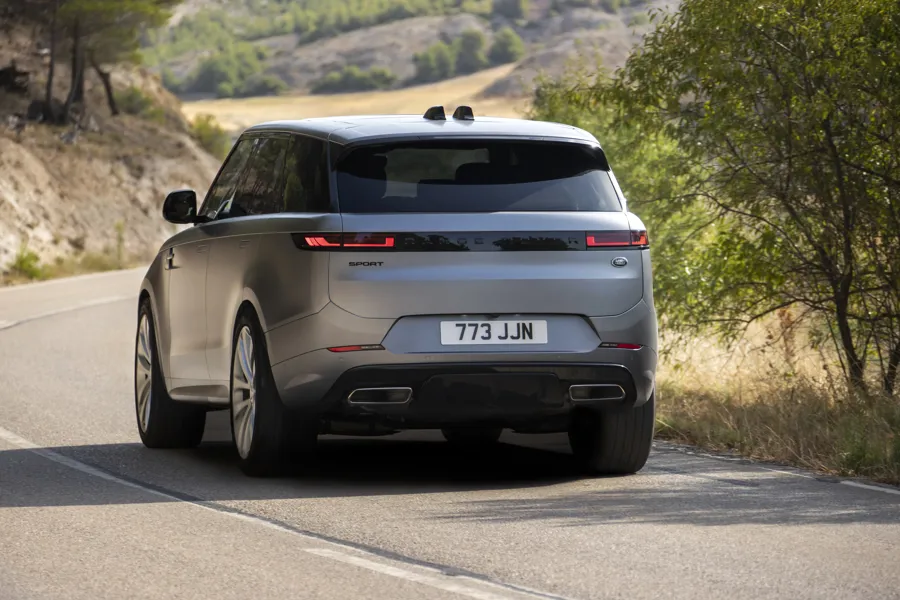
How do I lease a Range Rover Sport through IVF?
Leasing a Range Rover Sport through Intelligent Vehicle Finance is straightforward and starts with a short conversation about how you will use the car: business or personal, annual mileage, preferred lease term and which powertrain fits. We then check live availability across our funder panel and confirm what is genuinely deliverable, including any factory-order lead times. Where a specification matches stock we hold, delivery can often be arranged in around 3 to 7 working days; factory orders take longer.
Once you choose a trim, we put together a personalised quotation reflecting your mileage, term and specification. IVF arranges your lease as an FCA-authorised credit broker, sourcing competitive terms from a panel of lenders based on your circumstances, and we may receive a commission from the lender for arranging the agreement. We are not a lender ourselves, and there is no cost or obligation to get a quote. Intelligent Vehicle Finance is also part of Global Vehicle Group, whose brands have funded more than 70,000 vehicles - so behind the personal service sits genuine group scale.
For business buyers, our Business Contract Hire uses the same funder panel as our Personal Contract Hire. Call 01752 429950 or request a callback and a named specialist will handle everything from quote to delivery.
Related pages from Intelligent Vehicle Finance
The Range Rover Sport sits within our prestige car leasing range; customers weighing it against a Cayenne or an X5 can compare Porsche leasing and BMW leasing, and the Mercedes-Benz leasing range covers the GLE. For the plug-in hybrid P460e as a company car, the company car tax (BIK) rates guide and the director's guide to company car leasing set out the tax position; business arrangements start at business car leasing.
Range Rover Sport leasing: frequently asked questions
Common questions we hear from business and personal customers about leasing the Range Rover Sport.
Which Range Rover Sport is best for company car tax?
The plug-in hybrid P460e and P550e are comfortably the most tax-efficient Range Rover Sport choices for a company-car driver. With CO2 emissions below 50g/km and over 70 miles of WLTP electric range, they sit in a far lower Benefit-in-Kind band than the mild-hybrid petrol, diesel or V8 trims, which materially cuts the monthly company-car tax. One timing point to note: the plug-in hybrid company-car tax regime changes from April 2028, so the current advantage is time-sensitive and worth factoring into your lease term. Always confirm your own position with your accountant.
What electric range does the Range Rover Sport plug-in hybrid have?
The plug-in hybrid Range Rover Sport offers up to around 76 miles of certified WLTP electric range on the P460e and around 75 miles on the P550e, quoted for tax and comparison purposes. Both use a 38.2kWh battery paired with the 3.0-litre Ingenium six-cylinder petrol engine. Real-world electric range is usually lower, particularly in cold weather or at motorway speed, but for many drivers the electric range is enough to complete daily commuting without using the petrol engine at all, which is where the running-cost and tax savings come from.
How long does the Range Rover Sport plug-in hybrid take to charge?
A 7kW home wallbox charges the Range Rover Sport plug-in hybrid from empty to full in around 5 hours, which is comfortably an overnight charge on an EV tariff. On a public rapid charger the car accepts up to 50kW DC, taking roughly 40 minutes to reach 80 percent. A standard three-pin domestic plug will charge it but is much slower and is best kept as a backup. For most owners, home charging overnight is the least expensive and most convenient option.
Which Range Rover Sport engine should I choose?
It depends on your mileage and whether the car is a company car. The D350 diesel mild hybrid suits high-mileage motorway drivers who want efficiency and range. The P400 petrol mild hybrid offers smooth six-cylinder refinement for lower-mileage private buyers. The P460e and P550e plug-in hybrids are the choice for company-car drivers who want the lowest tax. The P530 V8 is for private buyers who prioritise outright performance, and the P635 SV is the flagship. IVF can talk through which fits your annual mileage on 01752 429950.
What does a Range Rover Sport lease include?
A Range Rover Sport lease from IVF covers the use of the car for an agreed term and annual mileage, at a fixed monthly rental, with free UK delivery and road tax included for the duration of the contract. Optional maintenance packages covering servicing, tyres and wear items are available at additional monthly cost if you want fully predictable running costs. Insurance is arranged separately by you. We set the term and mileage around how you actually drive, so you are not paying for cover you will not use.
What happens at the end of a Range Rover Sport lease?
At the end of a Range Rover Sport lease you simply hand the car back. There is no balloon payment to settle and no resale risk to worry about, because you never owned the car. As long as it is returned within the agreed mileage and in line with fair wear and tear guidelines, there is nothing further to pay. If you would like to move into a new Range Rover Sport or a different model, we can arrange a replacement to line up with your return so you are never without a car.
Can I lease a Range Rover Sport through my business?
Yes. Business Contract Hire is one of the most popular ways to run a Range Rover Sport, particularly the plug-in hybrid, which combines the lowest company-car tax in the range with genuine performance. VAT on the monthly rentals is recoverable in part or in full where the car is used for business, depending on circumstances, and the rentals can typically be treated as an operating cost. IVF arranges Business Contract Hire across the full Range Rover Sport range as an FCA-authorised credit broker. We are not a lender, and we may receive a commission from the lender for arranging your agreement.
How does the Range Rover Sport plug-in hybrid compare with the BMW X5 and Porsche Cayenne for company-car tax?
For 2026/27, the Range Rover Sport plug-in hybrid is the only one of the big premium plug-in hybrid SUVs whose official electric range clears HMRC's 70-mile threshold, placing it in the 7% Benefit-in-Kind band. The BMW X5 xDrive50e (up to around 67 miles), Mercedes GLE 400 e (up to around 65 miles) and Porsche Cayenne E-Hybrid (up to around 52 miles) all sit in the 40 to 69 mile band at 10%. The exact band for any vehicle depends on its certified CO2 and electric range figures, which vary by derivative and wheel size, so we confirm the position on the specific car when we quote. IVF can quote any of these models so you can compare monthly costs side by side.
Ready to lease your Range Rover Sport?
Speak to a specialist for a live quote on your chosen powertrain, mileage and term.
Reviewed by Stacey Smith, Brand Director, Intelligent Vehicle Finance. Last updated: July 2026. Subject to status and availability. IVF is a trading style of XLCR Vehicle Management Ltd (Company No. 03923327), authorised and regulated by the FCA (FRN 315268). IVF is a credit broker, not a lender, and may receive a commission from lenders for arranging finance.
Tax disclaimer: Company-car tax on plug-in hybrids depends on CO2 emissions and certified electric range, and the plug-in hybrid Benefit-in-Kind regime changes from April 2028. Fully electric company cars are taxed at 4 percent for 2026/27, rising to 5 percent in 2027/28 and 7 percent in 2028/29. Rates are set by HMRC and subject to change. Tax treatment depends on individual circumstances. Always consult your accountant. Any figures given are illustrative only.