

Ford Leasing
- Rated 4.9/5 on Feefo
- FCA authorised, FRN 315268
- BVRLA leasing broker member
- Part of Global Vehicle Group


Which Ford belongs on your shortlist?
Choose Puma for the compact crossover brief, Kuga for a family SUV with petrol and hybrid choices, or Explorer and Capri for two different electric bodies. Tourneo Connect is the sliding-door passenger carrier. Mustang Mach-E serves the electric SUV brief; the V8 Mustang serves the sports-car one.
| Your requirement | Ford to consider | The decision that matters |
|---|---|---|
| A compact SUV for commuting and family use | Puma or Puma Gen-E | Choose petrol mild-hybrid or full electric first. Then check battery generation, gearbox and equipment. |
| A family SUV with hybrid choices | Kuga | Petrol, Full Hybrid and Plug-in Hybrid are distinct. Compare charging access, rear-seat space and any towing requirement. |
| An electric family SUV | Explorer | Choose battery, rear-wheel or all-wheel drive and useful packs. Earlier and newer batteries share the model page. |
| An electric crossover with a coupé-style profile | Capri | Compare rear headroom, load opening and visibility with Explorer, then match battery and drive layout. |
| An electric SUV with a performance-led brief | Mustang Mach-E | Select, Premium and GT listings differ in battery, drive and equipment. Separate useful capability from features you will seldom use. |
| More flexible passenger access | Tourneo Connect | Specify five or seven fitted seats, body length and engine. Check luggage room with every required seat occupied. |
| A petrol sports car | Mustang | Choose coupé or convertible, GT or Dark Horse and gearbox. This is separate from the electric Mustang Mach-E. |
| A commercial load-carrying vehicle | IVF van leasing | Start with payload, load space and business use. Do not choose a van from the passenger-car tax comparison. |
More detail on the listed Ford models
Explorer is the more upright electric Ford to try when rear access and a square family-SUV body lead the brief. The current rear-wheel-drive Extended Range Style and Select have a 79 kWh usable battery and up to 374 miles WLTP combined. Ford gives a 10–80% charge time of 29 minutes at a maximum DC rate of 183 kW. Those figures belong to the newer 79 kWh car, not the older 52 kWh Standard Range or 77 kWh rear-wheel-drive derivatives also listed by IVF.
Capri Select is worth shortlisting when long electric journeys and the coupé-style body both suit your use. The current Extended Range rear-wheel-drive version has a 79 kWh usable battery and up to 389 miles WLTP combined. Ford quotes 29 minutes for a 10–80% charge at a maximum DC rate of 183 kW. IVF also lists older 52 kWh and 77 kWh rear-wheel-drive cars, to which this newer 79 kWh specification does not apply.
Ford leasing at a glance
- Current MY27 Puma Gen-E has a 46.8 kWh usable battery; earlier listed cars carry a 43 kWh label.
- Current Explorer Extended Range RWD uses a 79 kWh usable battery; older 52/77 kWh listings differ.
- Capri’s 572-litre rear boot is 102 litres larger than Explorer’s 470 litres.
- Zero-emission company cars have 4% BiK in 2026/27, rising in later tax years. A Ford hybrid does not automatically receive that rate.
- Current MY26 Mustang Mach-E Premium RWD uses an 88 kWh usable battery; earlier 91 kWh-labelled cars differ.
- Current Capri Extended Range RWD charges from 10–80% in a quoted 29 minutes at 183 kW DC; that is the newer 79 kWh version.
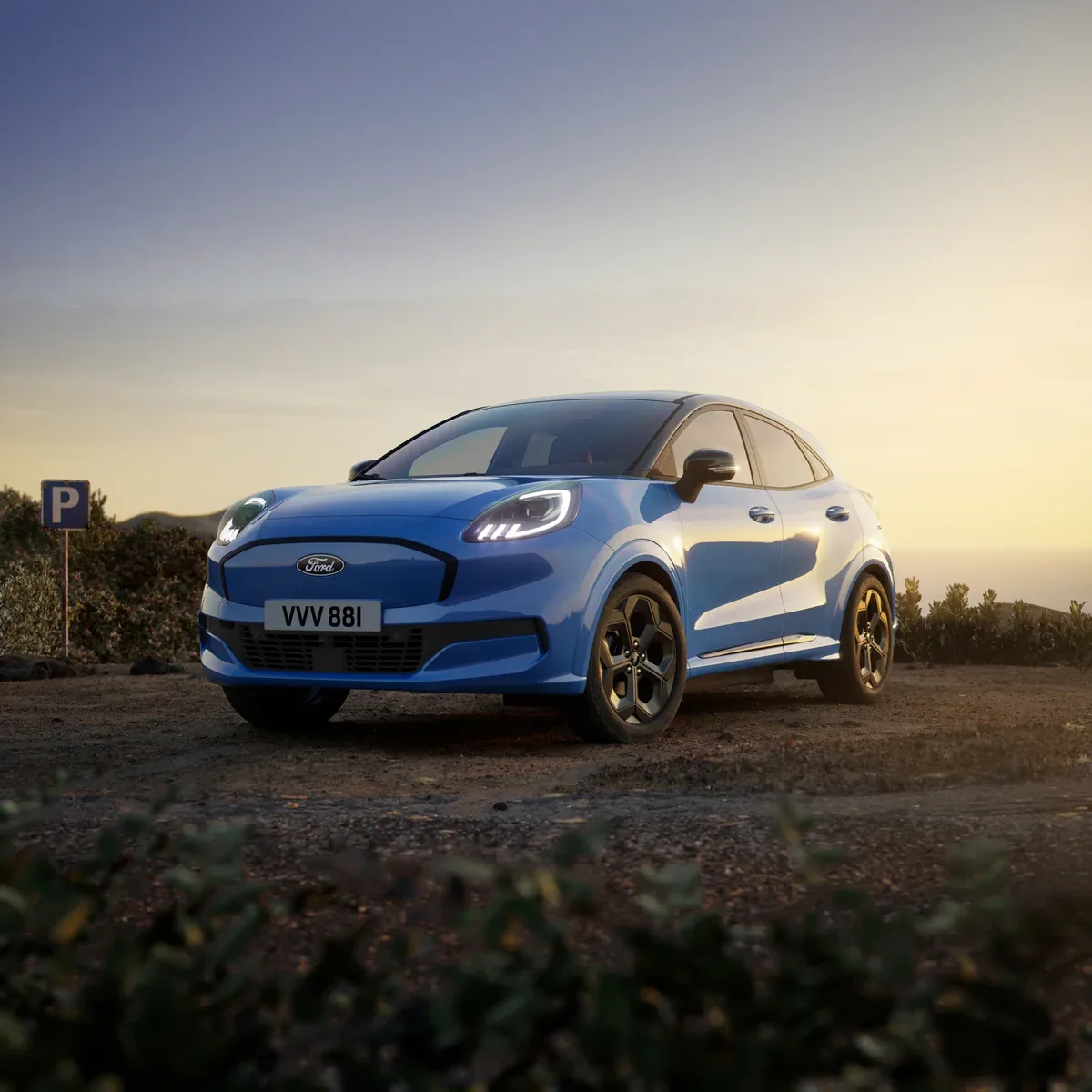
Puma or Puma Gen-E: decide how you want to power the week
Choose Puma EcoBoost mHEV if you want petrol refuelling without a plug, or Puma Gen-E for an electric daily routine. Gen-E’s underfloor GigaBox and separate front storage are useful reasons to try your regular load in the actual car, especially when charging cables otherwise share the boot with bags.
For compact electric daily use, current Puma Gen-E Select offers up to 259 miles of Ford’s WLTP overall range, measured on the combined cycle. Its MY27 battery has 46.8 kWh of usable capacity, with Ford quoting a 10–80% charge in 26 minutes using 100 kW high-power charging. Premium’s equivalent range is up to 251 miles, so the trim choice changes the headline as well as equipment. These MY27 figures do not describe IVF’s earlier 43 kWh-labelled Gen-E entries.
Kuga: choose the hybrid around charging, passengers and towing
Choose Kuga Full Hybrid when you want the family SUV without plugging in, or PHEV when regular charging can cover useful daily mileage. The sliding rear seats let you balance legroom with luggage. Try the seat position your passengers need before counting the largest boot figure.
Choose an appropriately specified Kuga for towing: Ford quotes up to 2,100 kg for PHEV and Full Hybrid AWD versions. The exact car’s braked-trailer approval and towbar still govern, and the catalogue’s 21–23 g/km PHEVs and NI-marked 57–61 g/km entries need separate registration and emissions checks for company-car tax.
Explorer and Capri: compare the battery as well as the body
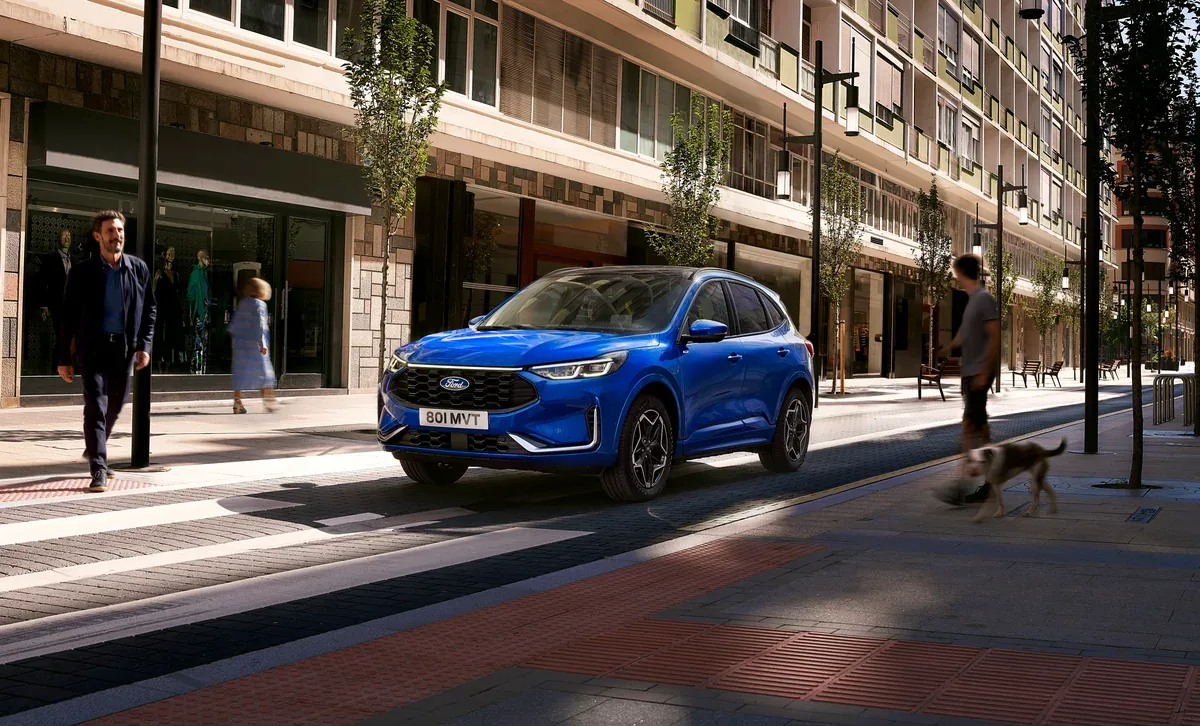
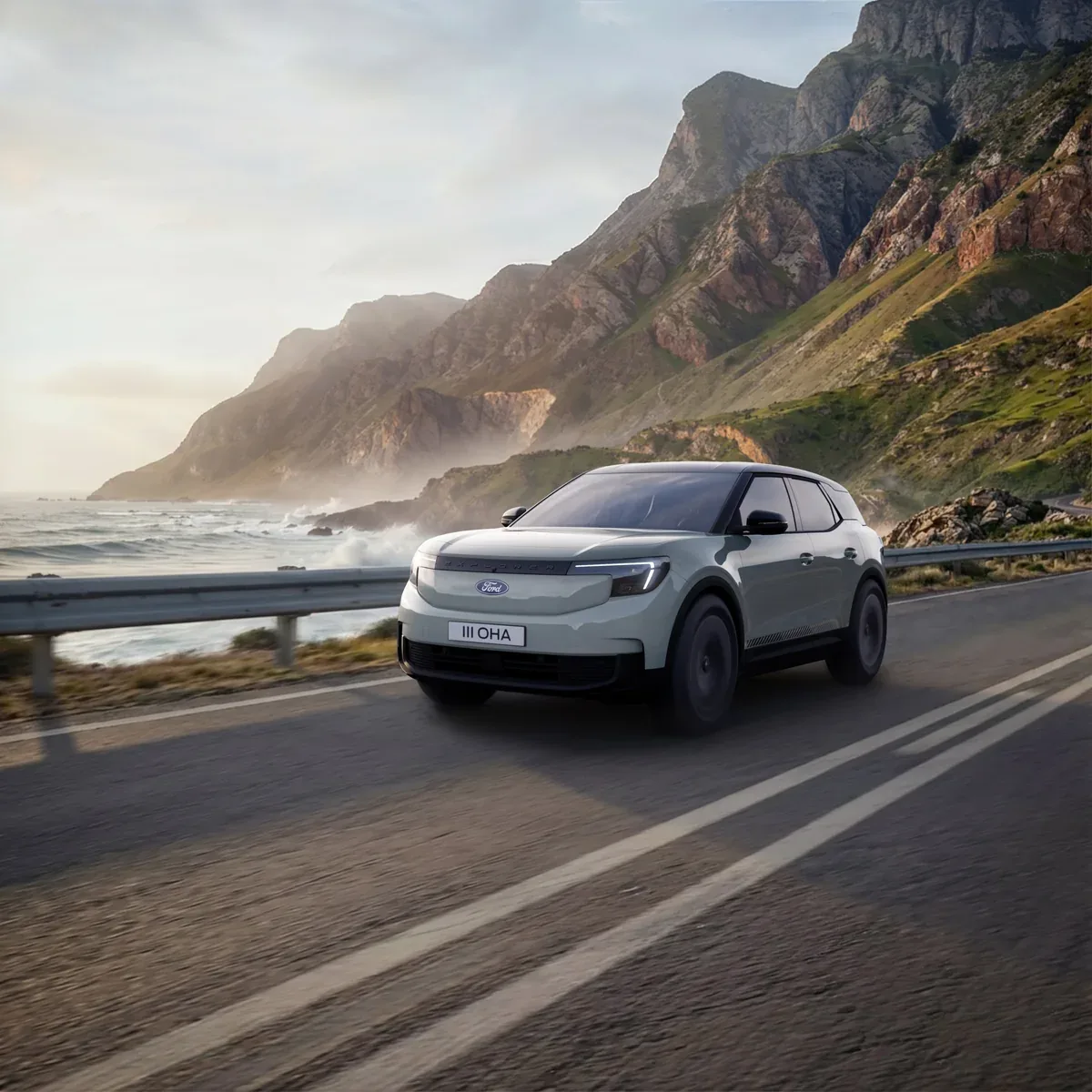
The more upright electric-SUV brief points to Explorer; Capri offers the coupé-style outline and its own loading arrangement. Ford publishes 470 litres for Explorer and up to 572 litres for Capri with its adjustable floor: a 102-litre difference that gives the sloping-roof car a practical reason to join the shortlist.
Compare the two with the same intended battery and driven wheels, then choose equipment. IVF lists earlier 52/77 kWh cars alongside 58/79 kWh versions, so current range and charging claims need the matching battery generation; the published boot comparison also needs the relevant floor position and your own luggage test.
Mustang Mach-E and Mustang: two very different reasons to choose Ford
Mustang Mach-E Premium rear-wheel drive is the longer-range choice to weigh against the AWD and GT versions. Ford’s current MY26 guide gives it an 88 kWh usable battery and up to 382 miles WLTP combined. Its quoted 10–80% charging time is 36 minutes using 150 kW DC, making the likely stop as useful a comparison as outright performance. That 88 kWh Premium specification does not cover the older 91 kWh Premium or 72 kWh Standard Range listings in IVF’s catalogue.
Choose the petrol Mustang for the V8 sports-car experience, with coupé or convertible body and gearbox preference leading the decision. Insurance, fuel and tyres belong beside the contract, while a company-provided car needs its own petrol tax assessment.
Tourneo Connect: passenger places and sliding-door access
Choose Tourneo Connect when sliding-door access and carrying people are more important than an SUV outline. Ford offers five- and seven-seat configurations, and regular and Grand bodies; put the seats you need and the luggage behind them into the same viewing. IVF explicitly labels some petrol and diesel cars seven-seat, while a PHEV name alone does not settle the layout.
For a business panel van, use IVF’s separate van leasing service. The Transit Custom route in this car catalogue contains Nugget leisure derivatives, so a camper enquiry and a commercial load-carrying brief need different vehicles and tax assessments.
Driver assistance, charging and equipment for everyday use
Choose assistance and comfort options around a task they solve, such as frequent motorway driving or difficult parking. BlueCruise can support hands-free driving in designated Blue Zones on compatible cars, with the driver watching the road and responsible; hardware, activation and subscription conditions apply.
Plan electric charging where the car normally rests, with an alternative for days that place is unavailable. List the parking aids, seat equipment and packs you need so IVF can compare equivalent cars, including features supplied at handover and those requiring later activation.
How IVF makes your Ford comparison useful
Ask IVF to separate the battery generations hidden under the same Ford model and trim names. A 43 kWh-labelled Puma Select and a newer Select, or two Kuga PHEVs with different emissions entries, need that work before the quotes are comparable; we can then align mileage, term and maintenance with your actual use.
For a director, we separate the business’s contract commitment from the driver’s personal tax. For a private lease, we focus on the total hire commitment, mileage and running costs. Our business leasing guide explains the wider approach, and IVF’s Feefo service reviews provide independent customer feedback.
Ford company-car tax: a hybrid badge does not settle the rate
A fully electric Ford uses the zero-emission BiK percentage. A petrol mild-hybrid or Full Hybrid uses its CO2 band; a qualifying plug-in hybrid also depends on certified electric range. For a company car available for private use, P11D value and the appropriate percentage broadly establish the taxable benefit, which is then taxed at the driver’s applicable income tax rate.
These examples use actual IVF Puma listings checked on 10 September 2026. They assume a full tax year, a single 40% income tax rate and no employee contribution or other adjustment. They show annual personal company-car tax only, not rentals, employer costs or the overall saving from changing cars.
| Listed derivative | P11D value | Tax specification | BiK | Annual personal tax |
|---|---|---|---|---|
| Puma 1.0 EcoBoost Hybrid mHEV Titanium manual | £26,635 | 122 g/km | 30% | £3,196.20 |
| Puma Gen-E 124 kW Select 47 kWh | £29,930 | Zero-emission electric | 4% | £478.88 |
The published tax-year path for Ford
The electric-range bands are tax classification thresholds, not advertised Ford driving ranges. For a plug-in hybrid, obtain the exact certified CO2 and electric range; the Kuga entries marked NI illustrate why a model-wide percentage is insufficient. HMRC’s temporary PHEV emissions easement also has registration-date, Euro-status and other conditions, so ask your accountant to confirm whether it applies to the supplied vehicle. Puma Gen-E, Explorer, Capri and Mustang Mach-E are electric; Kuga FHEV does not plug in, while Kuga PHEV needs certified electric-range tax data; the V8 Mustang and Nugget camper need separate assessment.
| Tax specification | 2026/27 | 2027/28 | 2028/29 | 2029/30 |
|---|---|---|---|---|
| Zero-emission electric car | 4% | 5% | 7% | 9% |
| Qualifying PHEV: 1–50 g/km; certified electric range 40–69 miles | 10% | 11% | 18% | 19% |
| Qualifying PHEV: 1–50 g/km; certified electric range 70–129 miles | 7% | 8% | 18% | 19% |
| Petrol/mild-hybrid at 120–124 g/km, such as the illustrated Puma | 30% | 30% | 31% | 32% |
The illustrated bands are Zero-emission electric car: 4% in 2026/27; Qualifying PHEV: 1–50 g/km; certified electric range 40–69 miles: 10% in 2026/27. Puma Gen-E, Explorer, Capri and Mustang Mach-E are electric; Kuga FHEV does not plug in, while Kuga PHEV needs certified electric-range tax data; the V8 Mustang and Nugget camper need separate assessment. Confirm P11D, certified CO2/range and transitional treatment with your accountant. Read the general company-car BiK rules.
Ford: road taxes across the agreement
ECS uses list price with options before discounts, not rental or assumed P11D equivalence; confirm registration and funder handling. VED rules; eVED proposal. Tax checked 10 September 2026.
| Cost and timing | Application to this shortlist | Rule to check |
|---|---|---|
| Vehicle Excise Duty (VED), 2026/27 | Puma Gen-E and other EVs versus Kuga hybrids and Mustang petrol | Year one: £10 for zero-emission cars; petrol/hybrid rates follow registered CO2, without the former hybrid discount. Thereafter: £200 annually before supplements. |
| Expensive Car Supplement (ECS) | Kuga PHEV remains within petrol/hybrid thresholds. | £440 annually for five years from the second licence. Thresholds: more than £40,000 petrol/hybrid; more than £50,000 for qualifying zero-emission cars registered from 1 April 2025. |
| Planned eVED, April 2028 | Ford EVs and plug-ins differ; Nugget classification needs separate advice. | Additional to VED: 3p per mile electric; 1.5p per mile plug-in hybrid. Not a current charge; final legislation and implementation remain relevant. |
Ford business accounts
Ask your accountant about 50% rental-VAT recovery with private availability, depending on circumstances; the 15% hire-cost restriction above 50 g/km; and FRS 102 lease recognition for periods from 1 January 2026.
Warranty and maintenance over your chosen mileage
Ford’s standard passenger-car warranty is three years or 60,000 miles, whichever comes first. That limit deserves attention if your annual mileage is high or the lease runs for four years. Use the supplied vehicle’s start date, applicable terms and any agreed extension when planning that cover.
High-voltage battery cover is separate. For example, the current UK Puma Gen-E specification sets out eight years or 100,000 miles for the high-voltage battery and components, subject to its terms. That does not extend every component on the car for the same period. Ask for the exact model’s service portfolio, battery-capacity terms and exclusions.
Tourneo and Nugget-derived vehicles need their own passenger-car or commercial-vehicle schedule. Ask IVF to set out the applicable warranty alongside optional maintenance, with servicing, tyres, wear items and roadside assistance itemised separately.
From Ford shortlist to handover
- Separate Puma Gen-E, Kuga’s hybrid types and the passenger or luggage brief before selecting Ford equipment.
- Compare initial and monthly rentals, term, mileage, optional maintenance, fees and early-termination conditions on the same basis.
- Ask whether the named Ford is allocated stock or a factory order, with its battery, body and BlueCruise eligibility confirmed.
- Agree return standards and charges for excess mileage, damage beyond fair wear and tear or missing equipment, with insurance and fuel or electricity budgeted separately.
Compare Ford with the alternatives that meet the same brief
For a hybrid family car, compare Toyota leasing around the same passenger, luggage and charging requirements. For an electric SUV shortlist, consider Volkswagen and Kia with equivalent battery, equipment and agreement terms. The useful comparison is between specific cars you can actually obtain.
Our electric car leasing guide helps with the wider charging decision. If you want help turning those choices into a shortlist, request a callback with the journeys the car needs to cover.
Ford leasing questions
Settle the practical details before choosing your car and contract.
Is the Ford Puma a hybrid or an electric car?
The Puma model page includes petrol EcoBoost mild-hybrid versions and the fully electric Puma Gen-E. Mild-hybrid versions do not plug in; Gen-E needs external charging. Check the complete derivative, because IVF also lists different battery generations within the electric range.
Does a Puma ST-Line have the same specification as a Puma ST?
No. ST-Line identifies a styling and equipment grade. The separately listed Puma ST has a different performance specification. Check engine output, gearbox, wheels and equipment in the quotation rather than treating the badges as interchangeable.
Should I choose Kuga Full Hybrid or Plug-in Hybrid?
Start with charging access. Full Hybrid does not need an external charger. Plug-in Hybrid can make greater use of electric driving when it is charged regularly, but its suitability depends on your journeys and actual costs. Check the exact vehicle’s emissions and certified electric range before assessing company-car tax.
Should I choose Ford Explorer or Capri?
Start with Explorer if you prefer a more upright SUV body; compare Capri if you want the coupé-style shape. Ford quotes up to 572 litres of Capri luggage space using its adjustable floor, so try your actual load and rear passengers before deciding. IVF lists different battery generations: match any range or charging figure to the supplied battery, drive layout and model year.
Is Mustang Mach-E an electric version of the V8 Mustang?
Mustang Mach-E is a separate battery-electric SUV. The Mustang listings cover petrol V8 sports cars, with different bodies and gearboxes. Choose Mach-E for an electric SUV brief and assess the petrol Mustang separately for a sports-car requirement.
Can I lease a seven-seat Ford Tourneo Connect?
Seven-seat configurations are available, but the quotation must confirm fitted seats, body length and powertrain. Some IVF petrol and diesel entries explicitly identify seven seats; the plug-in listings do not establish that configuration from the name alone. Check luggage space with every required seat occupied.
Does BlueCruise mean the Ford drives itself?
No. BlueCruise is driver assistance for compatible, correctly equipped vehicles in designated Blue Zones. The driver must keep eyes on the road and remain responsible. Confirm model-year compatibility, activation and any subscription or included-access terms for the exact vehicle.
Do Ford electric company cars keep 4% BiK throughout the lease?
No. The zero-emission company-car percentage is 4% in 2026/27, followed by 5% in 2027/28, 7% in 2028/29 and 9% in 2029/30. Your personal tax also depends on P11D value and your income tax position. Petrol and hybrid Fords follow different rules; ask your accountant to check the full term.
What is included in a Ford lease, and do I own the car at the end?
Check the full quotation and agreement. IVF arranges free UK-wide delivery; road tax follows the funder’s terms, and maintenance is optional. Insurance, fuel and electricity are separate. Contract hire ends with return and no contractual purchase option. Excess mileage, damage beyond fair wear and tear, or missing equipment may create charges.
How soon can a Ford be delivered?
Delivery depends on the exact derivative, stock allocation, factory availability and completion of the funder’s checks. Tell IVF your required date before choosing. A catalogue listing does not establish immediate availability, and changing the battery, grade or options can change the expected timescale.
Talk through your Ford shortlist
Ask IVF to compare the Ford body, powertrain and equipment that suit your working week.
Intelligent Vehicle Finance is a trading name of XLCR Vehicle Management Ltd. Authorised and regulated by the Financial Conduct Authority, FRN 315268. We are a credit broker, not a lender, and we may receive a commission from lenders for introducing you to them. All vehicle finance is subject to status and individual funder criteria.
Company No. 03923327. The Melville Building, 15 Royal William Yard, Plymouth, PL1 3RP.
Specifications and catalogue reviewed 10 September 2026. Manufacturer range and charging figures depend on model year, version and test conditions; real-world results vary. Images are illustrative of the model and may show optional equipment.
Tax treatment depends on individual circumstances and may change; consult your accountant.
Last updated: September 2026